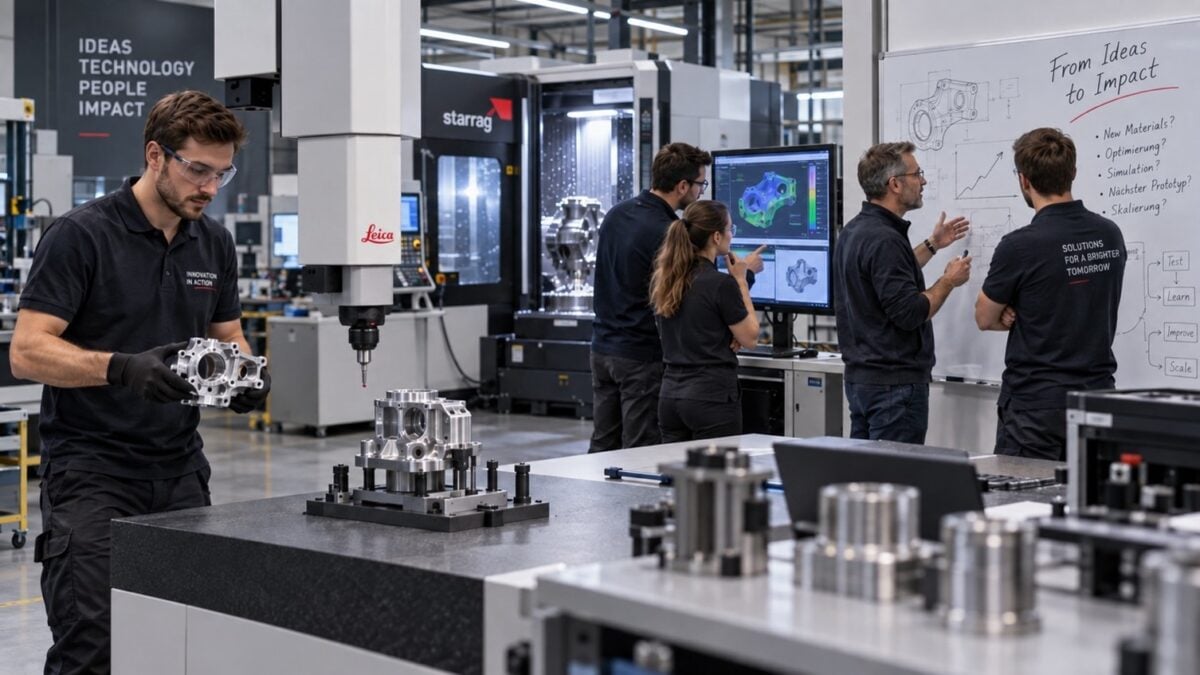



In recent years, the additive manufacturing of metals has developed from a prototype technology to a manufacturing process that can be used on an industrial scale. It opens up new degrees of freedom in design and functional integration and enables components that are difficult or impossible to manufacture using conventional processes.
Course objective and structure
Additive manufacturing is changing the way metal components are designed and manufactured. New degrees of freedom in design, functionality and use of materials are opening up for the design of components – provided that the underlying processes and materials are understood.
This one-day course offers a practical overview of the most important metallic AM processes and shows how powder, process parameters and post-treatment shape the microstructure and thus the component properties. Typical challenges and economic application scenarios are also discussed.
Tuesday, March 17, 2026
Empa, Academy
Überlandstrasse 129
8600 Dübendorf
Switzerland
Engineers, technicians, designers and anyone else involved in the additive manufacturing of metals in product development, production or quality assurance.
- Overview of metal additive manufacturing processes (powder bed and DED processes, sinter-based processes)
- Powder production and powder properties for AM
- Important alloy systems (steels, Ni, Al, Ti alloys and special materials)
- Thermal and mechanical post-treatment processes
- Characterization and properties of additively manufactured components
- Economic aspects and evaluation of use cases
Dr. Christian Leinenbach is head of the “Advanced Processing & Additive Manufacturing of Metals” group at Empa in Dübendorf and Thun and a lecturer in metals science and technology at EPFL. His work focuses on the development of new alloys and composite materials for additive manufacturing and the optimization of additive manufacturing processes for metals.
Organizer